Ebook Free Top Dog: The Science of Winning and Losing, by Po Bronson Ashley Merryman
When his is the moment for you to constantly make deal with the function of the book, you can make deal that guide is truly recommended for you to obtain the most effective idea. This is not just best ideas to get the life however additionally to undertake the life. The way of living is occasionally adapted the situation of excellences, however it will be such thing to do. As well as currently, guide is again advised right here to review.
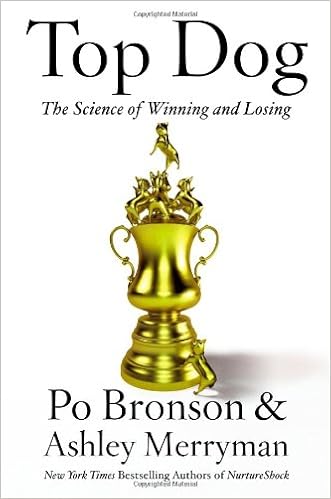
Top Dog: The Science of Winning and Losing, by Po Bronson Ashley Merryman

Ebook Free Top Dog: The Science of Winning and Losing, by Po Bronson Ashley Merryman
Library and publication shop are 2 crucial locations to obtain guides to read. Nonetheless, in contemporary era, it will certainly not just stimulate both locations. Lots of websites are now offered for the internet collection. As below, finding the hundreds of publications titles from inside and also beyond this country is very easy. You could not just intend to take guide yet likewise casual education and learning. As revealed, library can be an informal education system to expand the understanding, from any type of sources.
Reviewing is the very best thing to do to satisfy the time. Yeah, reading will certainly always bring benefits. Moreover, when you can recognize what the book to read, it's really well prepared. When you could check out guide completed, you can get finished information that the writer utters. In this situation, this book always gives advantages. Top Dog: The Science Of Winning And Losing, By Po Bronson Ashley Merryman naturally will certainly be so important to accompany you in your spare time. Even it is just few pages; you could review it by the times without forgetting exactly what you have actually reviewed.
To overcome your daily problems, related to your jobs, this book can be read page by pages. Of course, when you have no deadline jobs, you will also need what offered by this book. Why? It serves something interesting to learn. When you really love to read, reading something, what you can enjoy is the topic that you really know and understand. And here, Top Dog: The Science Of Winning And Losing, By Po Bronson Ashley Merryman will concern with what you really need now and you need actually for your future.
It is very easy to read the book Top Dog: The Science Of Winning And Losing, By Po Bronson Ashley Merryman in soft file in your gizmo or computer system. Once more, why must be so hard to get the book Top Dog: The Science Of Winning And Losing, By Po Bronson Ashley Merryman if you can decide on the less complicated one? This web site will certainly alleviate you to pick and also pick the best collective publications from one of the most wanted vendor to the released book lately. It will always upgrade the collections time to time. So, connect to internet as well as see this site constantly to obtain the brand-new publication every day. Currently, this Top Dog: The Science Of Winning And Losing, By Po Bronson Ashley Merryman is yours.
Amazon.com Review
Q&A with Po Bronson and Ashley Merryman Q. Are you refuting the concept that it takes ten years of practice to get great at anything? Po Bronson: Not at all, we feel our book is additive to that story. Nobody is judged on how they practice. They're judged on how they perform when it counts. Practicing is not the same as competing. You can pitch a million baseballs to your son until he perfects his swing--but wait until he faces a pitcher who wants him to miss. You might have ten years of experience in the advertising industry, but how do you handle the day your biggest client tells you they're leaving for a rival agency? Ashley Merryman: The truth is, nobody puts in ten years before they start competing. The world doesn't work that way. We are all thrown into competitive situations, long before we've had enough practice. Our results are still judged; our fate is still determined by how we do. To survive these trials, we need more than practice. We need competitive fire. Q. Did researching this book change how you each compete? Ashley Merryman: I'm a girl. All my life, I've been told to "play nice." I heard it on the playground and then the grown-up version they say in boardrooms: women are better at coalition-building, not competing. The science says that's wrong. And it's not just about toughening up. Women are prone to weigh risks more carefully than men; when women are confident they have a good chance to succeed, they'll compete. Sometimes this is an asset (in certain domains), but sometimes it's a hindrance. I've learned to recognize when to tap into my gender's knack for risk-analysis, and when to ignore it. Po Bronson: I didn't let many people know it, but before working on this book, I'd had a full-hip replacement and a few unsuccessful surgeries on my leg. I had many setbacks during rehab; I could barely walk at times. This affected every dimension of my life--it sapped my energy for my writing work and my volunteer projects. I was just losing my edge and my will to fight. Researching the book inspired me; it reminded me who I am. It restored my zeal for attacking big challenges. I hope the book does that for readers, first and foremost: gets them eager to surmount the challenges in their lives. Q. Everyone says that companies must innovate to remain competitive--but does it work the other way around? Doesn't competition destroy creativity? Po Bronson: There is a belief that creative genius is fragile and needs to be shielded from competition and comparison. But the research says that's a myth. Leonardo da Vinci loved to have his art put side by side with the work of others for debate over whose was best; Bach, too, liked to compete against other musicians in public concerts. Chemical fire extinguishers, food canning, transcontinental air travel--each began as the prize winner of a competition. Competition doesn't kill creativity: it facilitates creative output by supplying motivational drive. Ashley Merryman: Whether professional musicians or school children, studies have shown competition fuels creativity and even improves the quality of the work produced. More than that, the skills that make you a great competitor--such as a willingness to push boundaries, trust one's instincts, problem-solve--those are the same skills needed for innovation.
Read more
From Booklist
Bronson and Merryman follow up the best-selling NurtureShock (2009) with this intriguing look at the nature of competition. Most of us are taught from an early age that it’s good to be competitive, but we’re not usually taught how to compete. Sure, we can learn how to play a sport, and we can practice the skills, but practicing is not the same as competing. You can perfect your baseball swing in practice, but how do you react when you’re facing a pitcher who wants you to miss? The key element of competition, the authors say, is the ability to compete under pressure in situations that are not under one’s own control. Using plenty of real-world examples, from Olympic athletes to fighter pilots to intelligence operatives, the authors persuasively argue that technical skill is only one part—in many cases, the least important part—of what it takes to come out on top. Expect lots of talk-show play for this one. --David Pitt
Read more
See all Editorial Reviews
Product details
Hardcover: 352 pages
Publisher: Twelve; F First Edition edition (February 19, 2013)
Language: English
ISBN-10: 9781455515158
ISBN-13: 978-1455515158
ASIN: 1455515159
Product Dimensions:
6.5 x 1.2 x 9.5 inches
Shipping Weight: 1 pounds (View shipping rates and policies)
Average Customer Review:
4.2 out of 5 stars
108 customer reviews
Amazon Best Sellers Rank:
#340,801 in Books (See Top 100 in Books)
I grabbed this book thinking it might give me some insight into the people that I manage. More specifically, I wanted to learn about teams, team dynamics, and what differentiated winning teams from losers. Instead I got a book very much focused on the individual. Why do we compete. How much anxiety does it create to compete and how do different people handle it.The nice thing about the authors is they are basing their book off of countless scientific studies. You don't get a lot of trite statements or colloquialisms. The authors are good at taking the evidence of these studies and creating a compelling story.In the end, I learned several things about the differences between men and women in terms of competition, anxiety levels in competitors, playing not to lose, etc. I just wish there was more coverage on teams and the inner dynamics of winning teams.Well written. Well researched. A good solid read.
This is a very interesting book and an easy read for those of us who like to understand human behavior and psychology. It is filled with often counter-intuitive information about why competitiveness is actually good. There are some broad ideas that can be gleaned for parents, teachers, and managers about various things that might improve performance, but it is really not a guide for individuals. When you have finished this book, you won't have a list of things to do to improve your chances of good performance, but you will have an idea about the kinds of things that matter. So this is a thoughtful book for thoughtful people. Hopefully others will be prompted to provide more practical advice for people to follow.Having said all this, I still easily recommend this book for people who are curious about what makes people perform well.
Very well written and a joy to read. As someone who has to often synthesize scientific evidence for my job as a researcher what the authors have accomplished is no small feat. I only wish there was more research presented on how to teach children how to be good at competing like assessing when to compete and when not to, how to handle losing, how to handle the physiologic stress of entering into competition....etc. I disagree with one section where the authors conclude, after telling the story of how 5% of top coders win 80% of the prize money, that competition is inherently good and fun. Well it's only good and fun for that 5%.
Top Dog by Po Bronson and Ashley Merryman starts out with a very exciting pace. There was a brief glimpse at the science of competition. It then slows to more boring pace of information and studies I think would be helpful parents raising young children, yes there is a difference between boys and girls. There is plenty to help you understand competition in the work place. My favorite was situational- anger. One I have become quite acquainted with over the years. I was looking to improve my game instead this book will improve my life with insight on motivating others as a leader and motivating myself.
Very interesting read! I have for my whole life been the guy that is ok at the skill in itself but for some reason always tend to lose when things really matter... But I think it is now slowly changing which is crazy exciting! :) Need to read the book again though, a lot of information to process! Fun fact: The book "ends" at 58% in the kindle, so a whopping 42% of the book is references and a few last words. So it is not as heavy of a read as it seems to be at first!
Po Bronson and Ashley Merryman (authors of Nurtureshock) have written a book whose large message (kind of) bucks the trend of the self-esteem movement: while some people do worse under the pressure of competition, competitive situations (whether against oneself or others) seem to bring out many people's best. The book is devoted to 'filling in' that basic thesis with scientific data from a vast array of fields from behavioral economics to neoroscience.First, the basics of how stress and our reaction to it work. Dopamine is a neurotransmitter that produces adrenaline, the body's way of contfronting on stressful situations. COMT is an enzyme that degrades dopamine. People's bodies produce varying levels of dopamine, low dopamine levels leading to an overall competition-avoiding personality, etc. These two 'work together' to determine how a person will react to stress and competition. If your body produces a lot of dopamine naturally, but also produces a high level of COMT (to degrade the dopamine), you may handle stress and competition quite well. If you produce the same high level of dopamine but have a low level of COMT (meaning less dopamine is degraded), you may end up being the type who gets stressed very easily, "overreacting" to mildly stressful situations. Low dopamine levels and high COMT may produce someone who doesn't react strongly enough in stressful or competitive situations. Etc.But the book also talks about the differences in how men and women generally compete. Conventional wisdom tends to say that women aren't very competitive naturally (and those who are have simply learned to get on in a man's competitive world. But like much common wisdom, there is only a grain of truth to this. Pouring over studies of behavior and neuroscience, the authors make a case that women are as competitive as men, but simply are more judicious about when they enter competition.... generally when they believe they have a realistic chance of winning. Women, in other words, look at the odds of whether they have a chance to win, and if they think they do, they compete every bit as hard as men. Men, on the other hand, tend to place more emphasis on what they would gain if they did win (than what their chances are of winning). The authors do refrain from suggesting that one strategy is better than the other; in fact, both strategies may have evolved because they have survival value in different contexts. But they do give some surprising stats showing, for instance, that women investors and money managers have a better track record with their somewhat more conservative strategy than men, who frequently make riskier investment choices.There are some other great challenges to the conventional wisdom here. Foremost is a reassessment of what testosterone and oxytocin are and do. For a long time, scientists told us that testosterone was simply the "aggression drug" and that oxytocin is the "care/empathy drug." It turns out that things are quite a bit more complicated than this. Studies are showing that testosterone can not only increase one's aggression, but increase allegiance with a group when that group is in competition with another group. (Soccor players with high levels of testosterone seem more likely to do things like pass the ball and assist so that team mates can score.) Similarly, oxytocin does not just increase care and empathy, but care and empathy toward those in one's in-group (it also increases aggression against those in the out-group).Lastly, I think an overall message we should take from the book is that competition is not necessarily the bad, intrinsic-motivation-killing, thing (especially when kids are concerned) that we have been told it is by the "self-esteem movement." Yes, some people do not thrive, but wither, when they are faced with competitive situations. But most actually do better when they compete either against themselves or others. Kids who compete often learn to care more about the activity they are doing (sport, music, etc) than those who do not compete at those same activities. Competition also helps people learn to deal with being in stressful situations, both at how to be successful in them AND cope with lack of success. (Of course, they are also careful to acknowledge that healthy competition has necessary conditions, like competitors being mindful of sticking to rules of fair play, and the competition being designed so that competitors believe it to be a fair fight.)Overall, this book was very interesting to read. While written in a easy-going style, there is much information here, and those wanting to look at the more scholarly literature will find a large section of citations pointing them to articles they can pursue further. Teacher, parents, company executives, and just the generally interested lay public should all be able to find something in this book that can help them understand why and how we (should) compete.
Being a past coach & athlete, I have come to better understand the ambitions of myself and my student/athletes through Bronson's research and reporting, which (at least generally) has added new perspectives into why we humans exercise and perhaps compete against ourselves and others. An enjoyable read for anyone who wants to understand (or to better understand) the human psyche regarding the competitive drive (or lack therein!).
Top Dog: The Science of Winning and Losing, by Po Bronson Ashley Merryman PDF
Top Dog: The Science of Winning and Losing, by Po Bronson Ashley Merryman EPub
Top Dog: The Science of Winning and Losing, by Po Bronson Ashley Merryman Doc
Top Dog: The Science of Winning and Losing, by Po Bronson Ashley Merryman iBooks
Top Dog: The Science of Winning and Losing, by Po Bronson Ashley Merryman rtf
Top Dog: The Science of Winning and Losing, by Po Bronson Ashley Merryman Mobipocket
Top Dog: The Science of Winning and Losing, by Po Bronson Ashley Merryman Kindle
Top Dog: The Science of Winning and Losing, by Po Bronson Ashley Merryman PDF
Top Dog: The Science of Winning and Losing, by Po Bronson Ashley Merryman PDF
Top Dog: The Science of Winning and Losing, by Po Bronson Ashley Merryman PDF
Top Dog: The Science of Winning and Losing, by Po Bronson Ashley Merryman PDF